
The Pros and Cons of Owning a Supermarket Franchise in India
Connect Us
Recent Blog
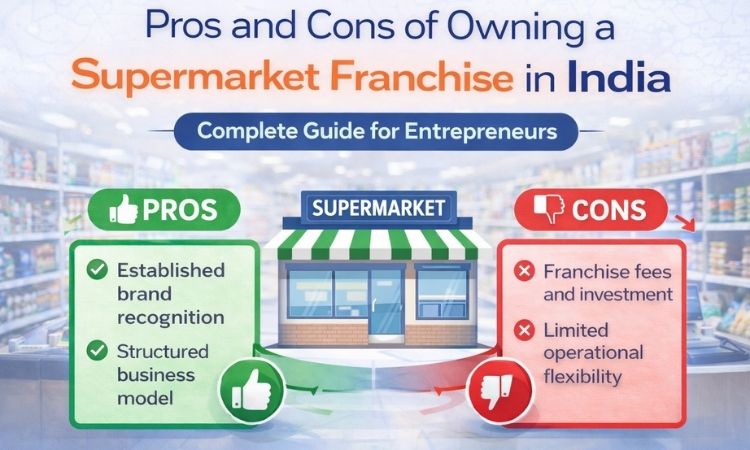
The supermarket business in India is growing rapidly. This is because of customers moving from traditional buying habits to organised retail stores. In Tier 2 and Tier 3 cities, people are looking for clean, well-managed retail supermarket stores that can offer them better visibility, control, fixed pricing, discounts, offers, and comfort.
Table of Contents
ToggleThis shift offers entrepreneurs new ideas about owning a supermarket franchise instead of starting an independent store. But owning a supermarket franchise is not only about branding or store setup.
It’s a business model, and every business, no matter how promising it looks, has both advantages and challenges. Some owners achieve stable growth quickly while others struggle. One of the main reasons behind this difference is the SYSTEM. But there are other out-of-control factors too.
But the good news is that supermarket owners can minimise their chances of failing if they fully understand what a franchise demands and how to fulfil the system.
Is a Supermarket Franchise the Right Business for You?
Before we discuss the pros and cons, it is important to understand why supermarket franchises have become popular in India. Many supermarket owners are first-timers and look for a structured way to enter retail without going through years of trial and error. The franchise model offers this to such owners. A franchise model gives them a ready system, operational guidance, and brand support.
This is enough to penetrate the market first.
But here is what you must know. A franchise model is not a shortcut to success. Franchises still need effort, discipline, and understanding of customer behavior. But what really happens? Several people expect profits without involvement, and this creates disappointment.
On the other hand, entrepreneurs with guidance build a long-term retail business. They often find the franchise model more practical than starting from scratch.
What Is a Supermarket Franchise?
A supermarket franchise is a business model where an entrepreneur operates a supermarket store under the name of an established brand. The entrepreneur gets to use the name, system, technologies, and support. Instead of building everything independently, the entrepreneurs enjoy big brands as their authorised partners and leverage their branding, supply chain, and store processes.
Results? The franchise owner follows a proven operational structure, enhancing the chances of success.
What do the franchise store owners get? The model usually offers support in areas such as store design, inventory planning, technology systems, staff training, and marketing guidance. RESULTS? Reduced risks and more consistent performance.
For many store entrepreneurs in India, this structure brings clarity and confidence when they are new and want a more secure entering the retail space.
Along with understanding the support structure, entrepreneurs should also be aware of the mandatory paperwork and approvals required before launching the store. This guide explains the documents required to start a supermarket franchise business in India.
The Pros of Owning a Supermarket Franchise in India:
1. Established Brand Trust
One of the biggest advantages of a franchise is the brand recognition it comes with. Creating a brand of trust itself is a challenge, especially in markets like India. The franchise model helps the owners utilise the brand name and win customers’ trust. Customers easily trust that they have heard of it before than a completely new store. This trust helps attract footfall faster after launch, reducing the time required to build credibility.
Results? Instead of spending years creating awareness, franchise owners start with an existing reputation that helps them focus more on operations and customer service.
2. Structured Business Model
Running a supermarket business means hundreds of decisions every day, from stock movement to billing. The operator must have expert-level knowledge to design, operate, and grow the business. There, the franchise model helps you with a tested system, which reduces guesswork and helps store owners follow proven processes.
This structure helps first-time entrepreneurs with simplified decision-making and reduces costly mistakes.
Different franchise systems operate under different ownership and operational formats, and selecting the right structure plays an important role in long-term stability. You can explore various supermarket franchise models in India and how they work to understand the differences.
3. Strong Supply Chain Support
Inventory management is one of the most calculated parts of running a supermarket. Tracking each sale and avoiding situations like overstocking or understocking can be a real headache. Franchise systems, on the other hand, often provide centralised procurement and supplier partnerships. This ensures better pricing and consistent product availability to customers.
RESULTS? The owners spend less time managing the vendors and more time in improving customer experience. A better supply chain means stable margins, enhanced customer satisfaction, and repeat sales.
4. Professional Store Setup and Layout Planning
A supermarket is not just a structure. It follows a psychological design and layout footprint that improves customer movement and sales. Franchise brands usually assist in store planning, shelf arrangement, and product placement that push the customers into the store for exploration and impulse buying. Remember, these are no guess works instead proven strategies.
RESULTS? This helps owners avoid common layout mistakes that can reduce sales, such as poor visibility or congested walkways.
Store layout directly affects customer movement, product visibility, and overall sales performance. Learning about supermarket layout design strategies for higher sales in India can help owners create more efficient and profitable stores.
5. Training and Operational Guidance
Supermarkets often require trained staff, and creating a completely new system requires time, energy, and experimentation allowance. Tasks like billing, inventory tracking, and customer service are essential and pre-made training programs help you standardise the operations. Moreover, the franchise model ensures that the business runs smoothly even as the store grows.
6. Marketing and Promotional Support
Truly, marketing a supermarket store can be expensive and uncertain. On the contrary, franchise brands usually run centralized campaigns and also provide promotional strategies to individual store owners. RESULTS? Store owners get the benefits of pre-designed advertising campaigns freely and attract customers without building marketing systems from scratch.
6. Faster Break-Even Potential
Because franchise models offer pre-optimised systems, such orders reach stability faster compared to independent supermarkets. Established procedures reduce operational inefficiencies and improve sales consistency.
Also Read: Top Supermarket Franchises in India
The Cons of Owning a Supermarket Franchise in India:
1. Franchise Fees and Initial Investment
Franchise models require initial investment, such as setup costs and brand fees. While this investment is for the support and structure, it may feel higher compared to starting a small independent shop. Entrepreneurs should really be careful about finances before committing.
2. Limited Flexibility in Decision-Making
Franchise owners must follow the brand guidelines related to store design, pricing strategy, and product categories. Meaning, they have limited creativity and do not have full control. Some people may just not like it and prefer their full creativity over every business decision.
3. Dependency on Franchise Systems
The success of a store partly depends on the franchise’s operational system. Means if owners don’t align with the process, the performance may not be as good as expected. This means choosing the right franchise partner is essential for better and more promising future collaborations. Missing bonds may result in business failure.
4. Location Still Matters
Even with strong branding, a poor location can impact sales. Some new owners assume a franchise guarantees success, but local demand and footfall remain crucial factors.
Most new franchise store owners often ignore this, but location still matters. A poor location can impact sales even with a strong branding. Some new owners assume that running a store under a franchise guarantees success, but the local demand and footfall are still some of the crucial factors.
Apart from location selection, completing legal registrations is equally important for smooth business operations. This guide explains all the licenses and legal requirements to start a supermarket franchise in India.
5. Operational Discipline Required
A franchise system works only when the owners follow all the processes consistently. Store owners who ignore standard operating procedures often face challenges despite having brand support. WHY? Because they try to reinvent the wheel and often fail because of experimentation.
In reality, many store owners experience operational and management difficulties during the early stages, which can impact performance if not handled properly. Understanding these common challenges faced by supermarket businesses in India helps owners prepare better.
Why Some Supermarket Franchise Owners Succeed Faster Than Others?
Many people assume success depends only on investment size and brand reputation. But in reality, operational execution matters more. Owners must understand that customer experience, inventory discipline, and staff management usually grow faster.
The secret of retail store success will always be customers and operational management. So owners must focus on local shopping habits, maintaining cleanliness, and ensuring product availability. Such professionalism creates long-term customer loyalty.
Remember, supermarket success is not one-time effort but consistent practice.
Supermarket Franchise vs Independent Grocery Store:
Till now, we have discussed how supermarket franchise vs independent stores affect your entrepreneurial success. Now, here is a quick comparison between the two. Check it out:
|
Aspect |
Supermarket Franchise |
Independent Store |
|
Brand Trust |
High from day one |
Must build slowly |
|
Supply Chain |
Organized and centralized |
Vendor dependent |
|
Risk Level |
Relatively lower |
Higher |
|
Support System |
Continuous guidance |
Self-managed |
|
Flexibility |
Moderate |
High |
|
Growth Speed |
Faster if systems followed |
Slower initially |
For entrepreneurs planning to enter the retail sector, understanding the complete launch process helps in making informed decisions and avoiding early-stage mistakes. You can read this guide on how to start a supermarket business in India step-by-step.
How SuperKirana Helps Entrepreneurs Reduce Franchise Challenges?
SuperKirana is one of the fastest-growing supermarket franchises in India currently. The franchise supports entrepreneurs by offering a structured, system-driven approach designed for Indian retail conditions. The model focuses on easy-to-use, practical systems that simplify the operations.
SuperKirana guides and supports the owners with store planning, product zoning, supply chain coordination, staff training, technology integration, and operational guidance. This helps supermarket owners avoid common mistakes such as poor layout, inventory confusion, or inefficient workflows.
What makes SuperKirana different is its hyper-focus on Tier 2 and Tier 3 markets. The team builds supermarkets that are practical, scalable, and aligned with real customer behaviour in the local market.
What SuperKirana Offers?
- 20,000+ products from 1200+ brands.
- Robust supply chain
- 24/7 Support and training.
- Low investment, high profit.
Conclusion: Should You Own a Supermarket Franchise in India?
Owning a supermarket franchise can be a smart business move for entrepreneurs who want structured growth and reduced risk. The model clearly benefits you with brand trust, supply chain support, and operational guidance. At the same time, it requires investment, discipline, and commitment to following systems.
The key is not simply choosing a franchise, but understanding how the model works and if it aligns with your business goals. In case you choose it, give your time for right planning, the right partner, and the right collaboration. Only then will the partnership become a long-term, sustainable business in India’s fast-growing retail market.
Take one step for your new entrepreneurial journey with SuperKirana. Connect with our supermarket franchise experts today.
Also Read: The Cost to Open a Supermarket or Grocery Store in India