
Documents Required to Start a Supermarket Franchise Business in India
Connect Us
Recent Blog
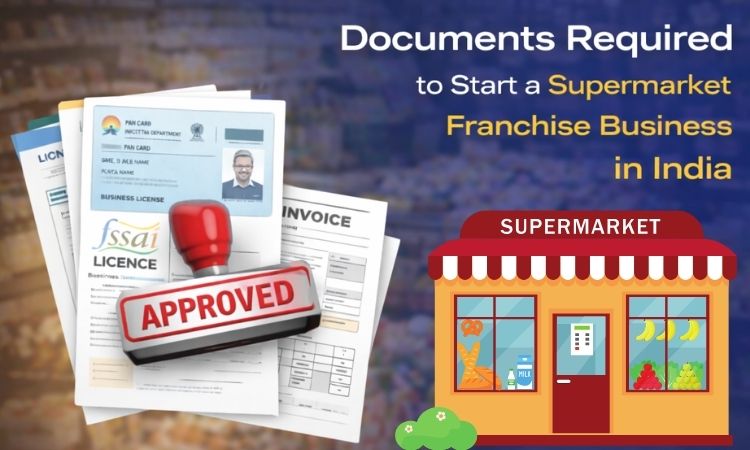
Organising a supermarket franchise business in India is an excellent idea, considering that the organised retail is continuously expanding not only in urban areas but also in Tier-2 and Tier-3 cities. Supermarket franchising is becoming a winning business model for entrepreneurs at the start of their journey as the consumer trends have drastically changed and more and more people are willing to spend in clean and well-organised grocery stores.
Table of Contents
ToggleHowever, it is very crucial to know which documents are required to start the operations of a supermarket franchise before making the first step. Many business owners pay a lot of attention to store interiors, inventory and branding, while they forget that legally what is necessary is proper documentation that would allow a supermarket to operate without any obstacles.
Without all the necessary registrations, licenses, and compliance approvals, a well-endowed supermarket franchise is exposed to the risk of getting a penalty, experiencing delays, or even being forcibly closed. This guide presents all the documents that are obligatory for you to start and run a supermarket franchise business in Indi,a and their significance at each stage of your business life.
What Is a Supermarket Franchise Business?
A franchise business supermarket is a place where a person or a business (the franchisee) runs a grocery or a retail supermarket branded, with the operational systems and support structure of a developed retail brand (the franchisor).
Franchise partners benefit from:
- A recognised brand name
- Established retail and operation systems
- Concentrated supply chain and supplier management
- Inbuilt billing and POS system
- Training of the staff and marketing guidance
This model has a very high effect in reducing the operational risk and helps new entrepreneurs to enter the organized retailing sector more confidently and in an organized manner.
Also Read: How to Start a Supermarket Business in India:Step-by-Step Guide
Documents Needed in a Supermarket Franchise
1. Business Registration Documents
The registration documents of your business are the ones that give your supermarket franchise legal personality. These documents attest that your store is licensed to operate and that it is legitimate in the eyes of government agencies. Proper registration is a must if you want to open a business bank account, apply for GST, sign supplier contracts, and legally employ workers.
Business License
A business license is the official permission to run a supermarket in a specific location issued by the local municipal government. It is an assurance that your shop meets the local commercial requirements. Although requirements and fees may vary from city to state, this license is still a must when carrying out retail operations.
Certificate of Tax Registration
Tax registration will keep track of your supermarket franchise that is subject to both the national and state taxation laws. It is the facilitating tool in the business of issuing the right taxes and paying them accordingly and also in keeping financial records that are clear and free from any penalties.
Registration Certificate of Trade Name
The formal legal registration of your trade name is the first line of defense for the identity of a supermarket in the market and thus it prevents the use of the same name by other businesses. Moreover, it is advantageous in creating brand awareness and stops the confusions of customers.
PAN Card (Business PAN)
Any supermarket franchise must have a business PAN card. It is essential for:
- Business bank account opening
- Filing income tax returns
- Applying for GST
- Signing financial and supplier contracts
2. Licenses and Regulatory Certifications
As supermarkets are selling food and daily-use products, meeting the requirements of regulations is significant, mainly in the aspects of safety of consumers and acquiring legal protection.
FSSAI License
Every supermarket that sells food items has to obtain a license issued by the FSSAI. It is a certification that your shop is a safe and hygienic food provider by the government standards set. In fact, this license is the source of trust for the customers, and it is a must for selling food products both packed and loose.
Health Trade License
This license is the certificate which your local health department issues after inspection and it states that your supermarket is well sanitized, clean and, by the hygiene standards, well-maintained towards the customers and employees.
Fire Safety Clearance
Fire safety clearance will ensure that your store meets the necessary fire safety standards such as emergency exits, fire extinguishers, and safety checks. This is particularly essential for medium to large supermarkets.
3. Documents of Store Location
The place where your supermarket is going to be should be properly and legally obtained as a business establishment.
Lease Agreement or Property Ownership
If the store is rented, a valid lease agreement is a must. If it is owned, ownership documents should be given just to confirm that the property is being used legally.
Zoning Approval
Zoning approval provides the confirmation that the property is licensed to carry on commercial retail business. This will keep you out of trouble with the local authorities and provide you with the stability of operations for a long time.
4. Financial and Tax Documents
Financial documentation is a tool for providing accountability, transparency, and efficient money transactions.
Business Bank Account Documentation
A separate business bank account will be needed to carry out the payments of suppliers, franchise fees, salaries, and daily transactions in a professional way.
GST Registration
With GST registration, your supermarket franchise will be able to issue legal invoices and claim input tax credits. Most organized retail businesses are mandatory.
Budget Projections / Budgets
They are projected profits, operational costs, and profits. They facilitate monetary planning and are usually required when obtaining loans or franchise permissions.

5. Inventory and Supplier Documents
The supermarket is built on the efficient management of inventory.
Supplier Agreements
Supplier agreements have been written well with the prices, delivery schedules, payment terms, and quality standards being accurately defined to ensure an uninterrupted supply and a decrease in disputes.
Inventory Management Plan
This document will specify the methods of ordering, storing, rotating, and replenishing products in order to reduce wastage and ensure that products are allocated to customer demand in the most efficient manner.
6. Documentation of Employees and Labour
Employee documentation is a means of protecting both the employer and employees.
Employment Contracts
These contracts clearly define job roles, salaries, working hours, benefits, and the conditions for termination.
Employee Identity Proofs
Payroll processing and statutory compliance are carried out using primary documents such as Aadhaar and PAN cards.
7. Insurance Documents
Insurance is a means of protecting your supermarket from unexpected risks.
Business Insurance
Covers the losses resulting from fire, theft, damage to the property, or the injuries of customers in the store.
Workers Compensation Insurance
That is good coverage for both medical and wage parts of the injured employees in the case of a workplace accident or injuries.
8. Marketing and Branding Documents
The marketing records are designed to initiate brand awareness and attract new customers.
Branding Materials
These are the brand symbols, store display, in-store visuals and promotional creatives.
Marketing Plan
An accounted strategy of the launch promotions, local advertising campaigns, online marketing and customer loyalty.
9. POS System Documents and Technology
The day-to-day operations of a cutting-edge supermarket are centered on technology.
POS System Agreement
An official contract with the POS vendor which features billing software, inventory management, reporting options, and technical assistance.
Data Privacy Compliance
Implements customer and transaction data in a safe and confidential way according to data protection laws.
10. Contract and Legal Agreements
The relations with the service providers and vendors are represented in the form of legal contracts.
-
Vendor and Service Contracts
The provision of housekeeping, security, logistics, and maintenance services on the basis of written agreements ensures that the daily activities are not interrupted.
Also Read: The Cost to Open a Supermarket or Grocery Store in India
Franchise Document Checklist – Full Supermarket
Category | Key Documents |
Business Registration | Trade License, Shop Act, PAN |
Food Safety | FSSAI, Health License |
Property | Lease Deed, Zoning Approval |
Financial | GST, Bank Proof |
Employees | Contracts, IDs |
Insurance | Fire, Property, Liability |
Technology | POS & Software Agreements |
The Importance of Documentation
Before opening a supermarket, documentation is not a mere regulatory measure, it will keep your supermarket business safe in the long run.
Supermarkets are directly involved with food items, the health of people, their workers, and money. Supermarkets are checked regularly by government officials in terms of food safety, fire safety, labour laws, and taxes. If you fail to submit documents or submit wrong documents, you may be fined, your operations may be suspended, or you may receive legal notices.
When you are well documented, you also become stronger in terms of your credibility with banks, suppliers, and franchise brands. Organised documentation creates trust whether it is a funding application, supplier credit negotiation or a franchise agreement.
Scalability is most importantly possible through documentation. Well-maintained records will be a good business asset in case you intend to expand to multiple stores, increase investment or sell the business in future.
Also Read: A complete guide to the supermarket model
How SuperKirana Simplifies Documentation for Franchise Partners
Documentation is a major challenge that new entrepreneurs in supermarkets face. First-time business owners may find the various registrations, approvals and compliance procedures extremely confusing and tiring, especially when a kirana store owner is adopting the organised retail model or planning to enter a supermarket franchise in India.
To address this challenge, SuperKirana has created a systematic step-wise documentation support system. Franchise partners are provided step-by-step guidance from initial planning to store launch, ensuring that all legal and compliance requirements are completed within the allotted time. This approach removes guesswork, saves time, and allows entrepreneurs to focus on growing their business with confidence.
Conclusion
More than money and passion are needed to start a supermarket franchise business in India. Proper documentation and adherence to rules and regulations are equally essential. From business registration and licensing to financial, employee, and technology documentation, each element plays a critical role in building a reliable and scalable supermarket operation.
With everything in place, entrepreneurs can focus on growth, customer experience, and long-term success. With the right planning and structured support, a supermarket franchise business can become both profitable and sustainable.